
In the serene yet deeply complex landscape of Yala, a story unfolds that is as heart-wrenching as it is alarming. In the humble expanse of a Muslim graveyard, nestled within the quietude of tambon Than To in the district of the same name, tragedy struck in a manner most brutal and unexpected. Ruslee Daleng, a 43-year-old volunteer ranger, found himself the unsuspecting victim of a grievous act of violence that ended his life all too soon. On a day that was already laden with sorrow, having bid farewell to his ailing father just the day before, Ruslee sought solace where he believed it might be found—in the sacred embrace of his faith, at his father’s final resting place. The air, heavy with grief and the whispered prayers of a son’s unyielding love, was shattered by the echo of a gunshot that took Ruslee from this world as he was engrossed…
THAI.NEWS - Thailand Breaking News

In the vibrant city of Bangkok, a tale of love, betrayal, and tragedy unfolded within the walls of a nondescript hotel, painting a grim picture of a romance gone awry. The central figure of this chilling drama is Rajman Yabav, a 32-year-old Indian national, whose love story turned into a nightmare in the busy lanes of Soi Wutthakat in Thon Buri district. The scene of this heartbreaking saga switches to Kanchanaburi, a province caught between the shackles of tradition and the whispers of the border it shares with Myanmar, where the climax of this tale reached its peak with the arrest of Yabav as he allegedly attempted to vanish into the shadows of another country. The catalyst of this sorrowful tale was Sukanya Dissayabut, a 51-year-old Thai woman, whose life was mercilessly snuffed out, leaving behind a canvas of questions and a grieving son who stood at the precipice of…

In the intricate dance of democracy, where transparency and procedure pirouette around the stage of political engagement, the Move Forward Party (MFP) has found itself in a bit of a tango with the Election Commission (EC). With the grace of a seasoned ballet dancer, Parit Wacharasindhu, an MFP list-MP and the party’s spokesman, took to the digital stage of Facebook to shine a spotlight on an impending performance: the selection of a new Senate set to commence, as the curtain falls on the current Senate’s term on May 10. Yet, in this production of political change, it seems the script—the regulations for selecting the new band of Senators—remains shrouded in mystery. Despite assurances given on a breezy March 28 meeting by the EC, promising that the rules would be unveiled before the colorful festival of Songkran, the stage remains bare, notes unread, and the actors, namely potential candidates and the…

In the electrifying race towards green transportation, Thailand is gearing up to be a pivotal battleground, courtesy of its welcoming stance towards innovation in the electric vehicle (EV) sphere. The Board of Investment (BoI) in Thailand has lit up with optimism, predicting a surge of investments from the globe’s battery powerhouses, with two trailblazing Chinese electric vehicle battery cell manufacturers at the forefront, ready to inject a staggering 30 billion baht into the Thai economy. This electrifying anticipation flows from a strategic roadshow organized by the Thai government, which showcased the tempting array of incentives Thailand offers. The roadshow, which took place in the buzzing provinces of Fujian and Guangdong from April 7-10, was not just a casual meet-and-greet. It was a clarion call to the world’s leading battery cell manufacturers, showing Thailand is serious about powering the future of transportation. Names that top the list of interested investors —…

In an atmosphere charged with determination, the House Committee on Industry orchestrated a pivotal meeting with state agencies, injecting a new lease of life into the quest for resolving the cadmium conundrum. This congregation wasn’t just any gathering at the parliament; it was a strategic convergence aimed at charting a path back to safety for the hazardous cadmium, originating from the serene yet now controversial landscapes of Tak. Under the watchful eye of Pattarapong Chatpattarasill, the wheels of action began to turn. With the urgency of the matter at hand, the Industry Ministry took a bold step forward. The steely resolve of Minister Pimphattra Wichaikul was evident as she marshaled the Samut Sakhon Provincial Industry Office into action, wielding the law as her sword. The directive was clear – to hunt down the guardians of the nefarious cadmium tailings that had made an unwelcome home in the province. It wasn’t…
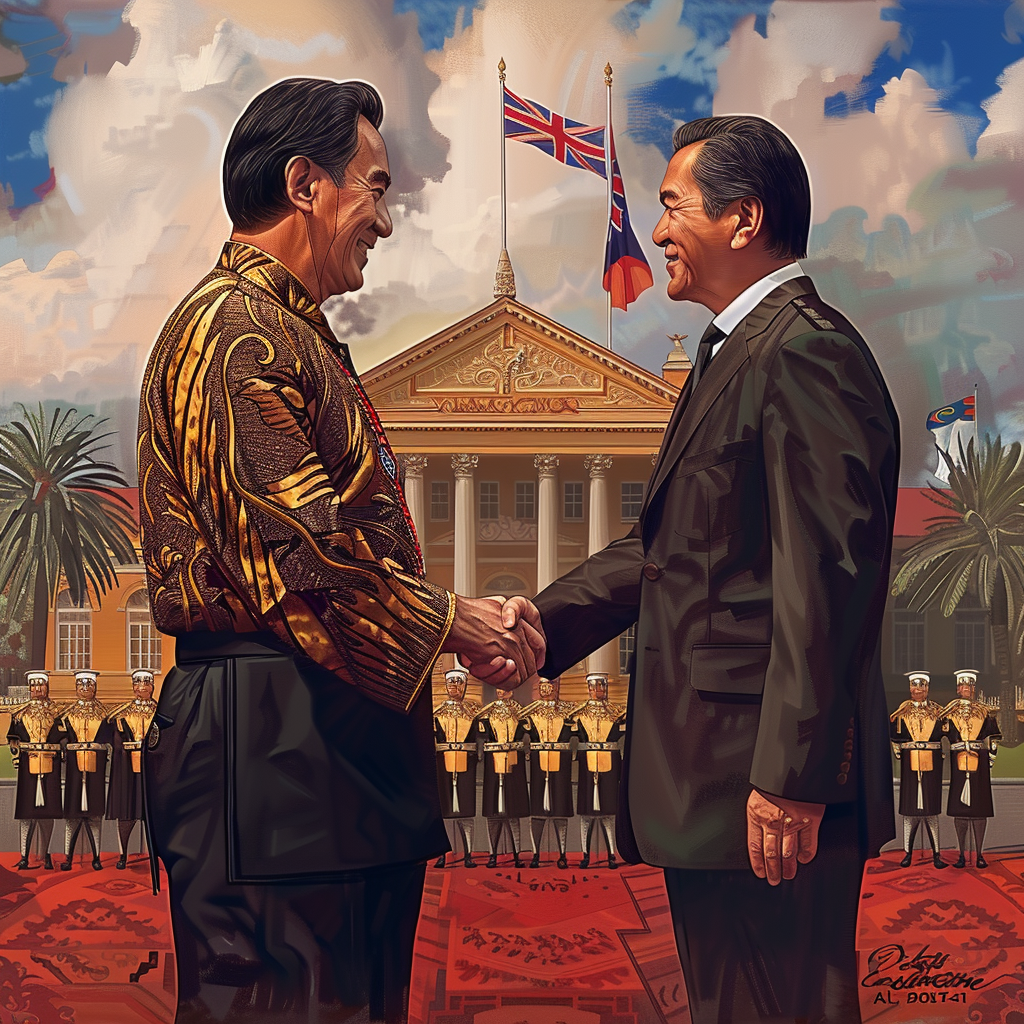
Under the grand arches of Thailand’s majestic Government House, history whispered through the air as two nations, bridged by the vast Pacific, stood on the cusp of a new dawn. It was here, amidst the pomp and pageantry befitting such an occasion, that New Zealand Prime Minister Christopher Luxon, accompanied by his Thai counterpart, Prime Minister Srettha Thavisin, basked in the glow of diplomatic camaraderie. The piercing sound of the guard of honour’s salute, a symphony of tradition and respect, marked the beginning of a day that would set the course for a groundbreaking partnership. The year was 2023, and the occasion? A bilateral rendezvous teeming with promises of a future woven together not just by ambitions but by the heartfelt commitment to elevate Thailand-New Zealand relations to a “Strategic Partnership” come 2026. This wasn’t merely a date on the calendar; it was a milestone marking 70 years of diplomatic…

On a bright and momentous day, September 5, 2023, an assembly of leaders, visionaries and policy-makers, led by the astute Prime Minister Srettha Thavisin, gathered at the iconic Government House. Their purpose? To take their solemn oaths of office before no lesser figure than His Majesty the King at the majestic Dusit Palace. Among them, Prime Minister Srettha Thavisin, a man of distinction, ninth from the right, stood poised and ready for the monumental task ahead. The photograph capturing this historic moment speaks volumes, immortalized by the lens of Chanat Katayu. In the corridors of power, whispers of a cabinet reshuffle have been stirring, hinting at a political ballet set to unfold. Dubbed “Srettha II”, this reshuffle isn’t just a routine changeover but a strategic maneuvering within the echelons of Thai governance. Spearheaded by Prime Minister Srettha Thavisin, this reshuffle involves a meticulous selection of cabinet members from Pheu Thai,…

Imagine the vibrant streets of Thailand, now pulsating not just with the rhythmic beats of its rich culture but also with the ceaseless hum of digital activity. This beautiful country, known for its breathtaking landscapes and warm hospitality, is riding the wave of digitalization, rapidly advancing into a future where everything is connected. However, lurking in the shadows of this bright future are cyber threats, growing in complexity and number, prompting an unprecedented alliance between Kaspersky and the National Cyber Security Agency (NCSA) of Thailand. This partnership, solidified through a Memorandum of Understanding (MoU), marks a pivotal moment in the battle for cybersecurity. With excitement bubbling in his voice, Eugene Kaspersky, the CEO of Kaspersky, underscores the essence of this collaboration. “As Thailand embraces the digital revolution, it also invites the attention of cybercriminals, turning the digital landscape into a battleground. Our commitment to Thailand isn’t just about safeguarding its…

In an atmosphere charged with anticipation and under the watchful eyes of the nation, the Move Forward Party (MFP), led by the discerning Pita Limjraroenrat, found themselves at the heart of a pivotal moment in parliament on January 31st. Pita, flanked by the astute Chaithawat Tulathon and a band of resolute members, listened intently as the Constitutional Court judges delivered a ruling that would send ripples through the political landscape of Thailand. The court’s finding that the MFP sought to amend Section 112 of the Criminal Code, known colloquially as the lese majeste law, hinted at an audacious attempt to recalibrate the foundations of the constitutional monarchy. With the sands of time slipping through their fingers, the MFP faced a formidable challenge. The clock was ticking down to a critical deadline set by the Constitutional Court, a deadline that would determine their fate. In an unexpected turn of events, the…
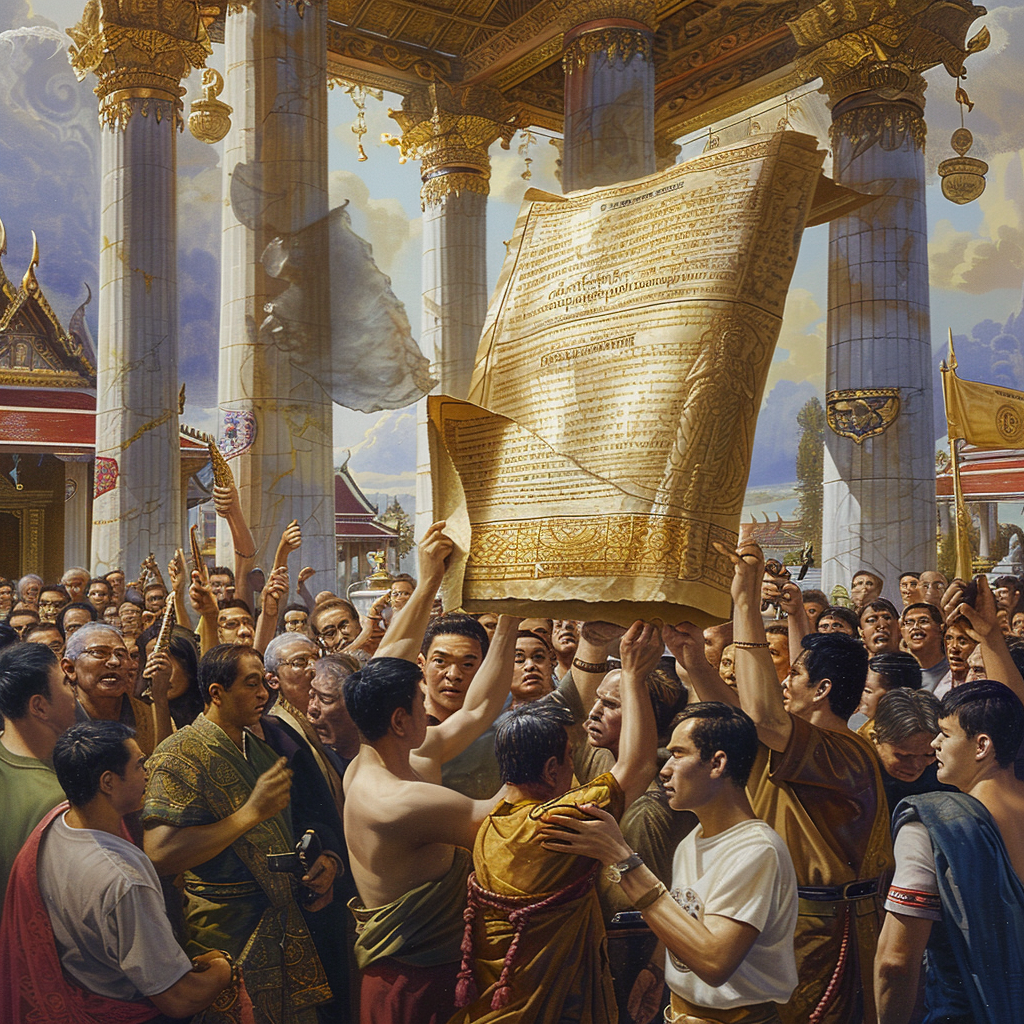
Picture this: under the gleaming spotlight at Democracy Monument, an intriguing sight catches the eye — a replica of the charter, elegantly presented in an accordion-style parchment, resting on a golden tray. This symbolizes the grandeur and gravity of constitutional monarchy, serving as a stark reminder of the country’s dedication to democracy. However, in a recent turn of events, the pulsating heart of Thailand’s democracy faced a significant moment. The Constitutional Court, in a session that was bound to leave a mark, addressed a pressing question from parliament. The air was thick with anticipation as the court deliberated on whether the constitution could undergo amendments before a referendum and the intricacies involved in the charter amendment process — including the burning question of how many referendums are deemed necessary. With unanimous agreement, all seven judges on the bench decided to reject the petition. Their rationale was crisp and clear: the…