
In an enthralling twist worthy of a political thriller, Thailand’s corridors of power have felt the seismic shift as Pichai Chunhavajira, a luminary with a résumé that reads like an adventure novel, steps into the role of finance minister. This strategic move, unveiled on a serene Sunday, catapults Mr. Pichai, at the sprightly age of 75, from the boardrooms of energy powerhouses to the heart of governmental strategy, tasked with reinvigorating the Thai economy amidst a labyrinth of challenges. His appointment, sanctified by His Majesty’s seal in the official Royal Gazette, is not merely a changing of the guard but a bold assertion of Prime Minister Srettha Thavisin’s trust in him. Pichai Chunhavajira, whose name has been synonymous with strategic foresight during his tenure as the chair of Bangchak Corp and his brief yet impactful stint at the helm of the Stock Exchange of Thailand, now assumes a dual mantle…
THAI.NEWS - Thailand Breaking News

In a move that has the corridors of power buzzing with anticipation, the seasoned corporate energy virtuoso and former steward of the stock exchange, Pichai Chunhavajira, has vaulted into the spotlight as Thailand’s newest finance minister. The announcement, which read like a plot twist in an enthralling political drama, was made official in the revered pages of the Royal Gazette on a Sunday that will now be etched in the annals of Thailand’s bureaucratic lore. At the venerable age of 75, Mr. Pichai isn’t just stepping into the shoes left by Prime Minister Srettha Thavisin; he’s striding into them with a legacy of leadership roles tucked under his belt. As a sage adviser to Mr. Srettha, Pichai’s tenure as the chairman of Bangchak Corp since 2012 is lauded in corporate circles, not to mention his brief yet impactful captainship at the helm of the Stock Exchange of Thailand earlier this…

In the early hours of a tranquil Sunday morning, when the Andaman Sea whispered tales of the deep to the starlit Phang Nga coast, an unforeseen drama unfolded, transforming the serene seascape into a scene straight out of an action-packed novel. The protagonist of our tale is none other than the Sri Thong Pae 7, a robust fishing trawler, that met its fiery fate amidst the vast, mysterious waters. It was approximately 3:30 a.m. when the calm of the night was shattered by the urgent distress signals received by the Thai Maritime Enforcement Command Centre Region 3 (Thai-MECC Region 3). The report was grave: the Sri Thong Pae 7, engaged in the seemingly mundane task of refuelling, was now a fierce inferno, its flames licking the night sky, a beacon of distress 15 nautical miles south-west of the enchanting Koh Surin islands. Aboard this vessel were nine souls, a mix…

The Democracy Monument, a herald of Thailand’s turbulent political past, recently found itself amidst a riot of color, thanks to the Public Park Office’s efforts to bedeck its surroundings with flowers. This picturesque scene, however, belies the stormy political undertakings that seek to reshape Thailand’s future. Last year, in the exhilarating aftermath of electoral victory, the Pheu Thai Party pledged to weave the fabric of a new political future for Thailand. They dreamt of a people’s charter, a beacon of democracy, which would be sculpted through the hands of an elected assembly and affirmed by the voice of the people in a public referendum. Yet, these ambitions would navigate within the safe harbors of Thailand’s constitutional monarchy. Despite their lofty ambitions and over seven months in the driver’s seat, their vehicle of change seems to have stalled before even reaching the starting line. The initial months were a hubbub of…

Imagine a place where nature’s grandeur meets tranquility, where the lush carpet of green extends as far as the eye can see, and the air buzzes lightly with the discreet harmonies of wildlife. This place, the Chiang Dao Wildlife Sanctuary in the heart of Chiang Mai Province, is not just a haven for the soul seeking solace in nature’s embrace but also a crucial bastion for some of the rarest flora and fauna on our planet. However, this paradise recently found itself in peril due to the actions of humans, prompting the Department of National Parks, Wildlife and Plant Conservation to take decisive action. Attapol Charoenchansa, the spirited chief of the department, has taken a stand in defense of this ecological treasure trove. Following the detection of several man-made hotspots in the sanctuary’s sensitive areas, he announced its closure, a pause for nature to heal, until forest officials can address…
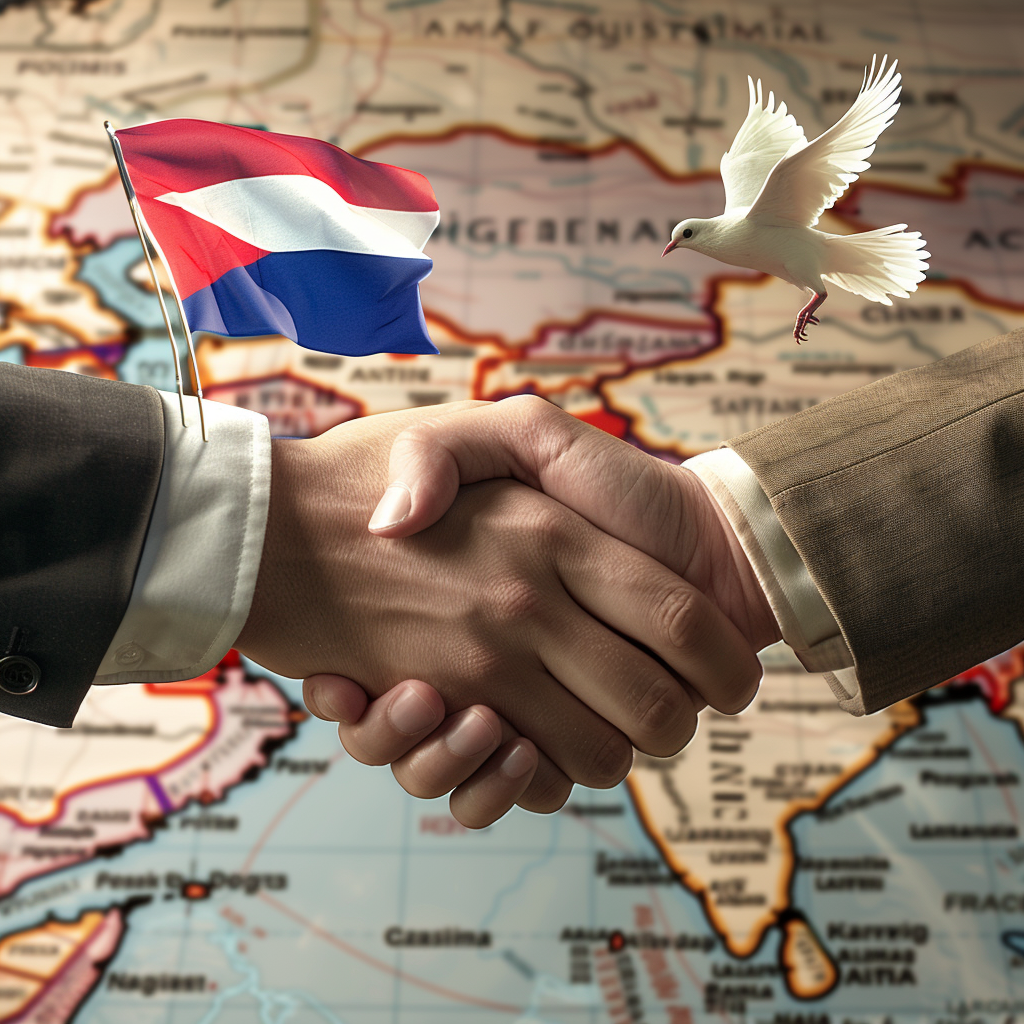
In the charming tapestry of Southeast Asian diplomacy, where each thread intricately weaves into the next, Laos has recently stepped into the limelight, expressing its appreciation for Thailand’s creative approach towards untangling the complex crisis in Myanmar. The suggestion on the table? The intriguing “Asean Troika and Troika plus” meetings, a proposal that aims to draw curtains on the ongoing saga of conflict shaking the land of Myanmar. Nikorndej Balankura, the articulate spokesman of the Foreign Affairs Ministry of Laos, shared insights into this fascinating development and Thailand’s earnest proposal to be the harbinger of peace in the tumultuous region. It was on a day not so long ago, specifically a Wednesday, when Thailand floated this diplomatic lifeline towards Myanmar’s military junta, sparking conversations among the guardians of peace. The essence of Thailand’s proposition lies in engaging, yet firmly advocating for humanitarian assistance and the promotion of peace across the…

Imagine stepping into an oasis where the air smells fresher, the greens are more vivid, and the sounds of the city fade away into a serene symphony of nature. This is not a daydream; this is the soon-to-open Bangkok Wetland Forest Park located in the heart of Bung Kum district. Prepare to be enchanted by this green jewel, which is far more than a mere park—it’s a testament to nature’s resilience in the urban sprawl of Bangkok. The visionary minds at the Bangkok Metropolitan Administration (BMA) have transformed an 86-rai plot, previously serving the practical purpose of a floodwater-retention basin known as Klong Lam Bung Kum, into an extraordinary “wetland forest”. This initiative is not just a nod to environmental conservation but a gift of clean air and verdant spaces to the city’s residents, a welcome respite in the concrete jungle. But what makes this park so special? It’s not…
Thailand’s Democratic Charter Quest: Pheu Thai’s Ambitious Reform Riddle and the Role of Referendums
Thailand’s Democratic Charter Quest: Pheu Thai’s Ambitious Reform Riddle and the Role of Referendums
Amidst the hustle and bustle of Bangkok, where the pulse of democracy beats at the heart of its vibrant streets, stands the Democracy Monument, freshly adorned with blooms as if in quiet salute to the nation’s fervent discussions on charter amendment. A scene that juxtaposes stillness with the whirlwind of political endeavors surrounding Thailand’s quest for a revamped democratic charter. Last year, under the spotlight of political promises, the Pheu Thai Party unfurled its ambitious plan as it steered the coalition government. Their pledge was bold and clear: to engineer a charter by the people, for the people, framed within the sanctity of Thailand’s constitutional monarchy. Yet, despite the passage of seven months, brimming with dreams of reform, the 2017 charter—a lingering shadow of the 2014 coup—remained unaltered, a testament to the winding road of political reform. The initial months of Pheu Thai’s governance were steeped in meticulous planning, laying…

In a move that could reshuffle the political deck of Thailand, Prime Minister Srettha Thavisin galvanized the corridors of power by finalizing a list that is bound to reconfigure the Cabinet’s constellation. On a day charged with anticipation, Srettha made his way to the Government House, armed with a list that’s been the subject of whispered speculations and fervent discussions. This wasn’t just any list; it was the definitive roster slated for royal endorsement, marking a pivotal moment in the nation’s governance. While the Prime Minister opted for a cloak of silence over the intricate details, the air buzzed with the implications of his actions. It all started when coalition parties, in a display of strategic camaraderie, presented their nominees for cabinet positions to Mr. Srettha. Swiftly, the Cabinet’s Secretariat sprang into action, meticulously vetting the candidates to ensure they were up to the mark. Following their approval, the Prime…

Imagine a scene right out of the bustling streets of Bangkok, where the neon lights meet the unwavering spirit of the city’s night owls. In this vibrant tableau, Pol Lt Col Darathorn Khajornsilp, a steadfast pillar of the Traffic Police Division 5, found himself at the receiving end of an unexpected physical token of “appreciation” – a kick to the cheek, courtesy of a motorist allegedly driving under the influence. This wasn’t just any motorist; this was a woman who once commanded boardrooms, a former senior IT executive with a narrative that turned heads and raised brows. On a fateful Tuesday night, within the woven complexities of Suan Luang’s alcohol checkpoints, our protagonist, Monsinee (a pseudonym to cloak her in a thin veil of anonymity), found herself embroiled in an episode that would make headlines. The plot thickened when her Mercedes-Benz was flagged down; a routine check revealed her blood…