
On a sweltering day in August 2017, the atmosphere outside the Supreme Court’s Criminal Division for Holders of Political Position was thick with anticipation. Yingluck Shinawatra, Thailand’s first female prime minister, stepped through the courthouse doors to make her closing statement in a case that reverberated through the nation’s corridors of power – the rice-pledging scandal. Little did the onlookers know, this day would mark the beginning of a judicial saga that culminated in Yingluck receiving a five-year prison sentence. A moment frozen in time, this event was but a chapter in the intricate tapestry of Thai political history. However, in a surprising twist of fate, the National Anti-Corruption Commission (NACC) recently chose not to further challenge the Supreme Court’s acquittal of Yingluck and five others regarding their involvement in a controversial 240-million baht public relations campaign. This decision has rippled through the political landscape, leaving spectators and insiders alike…
THAI.NEWS - Thailand Breaking News

Imagine stepping into the hallowed halls of Samsenwittayalai School, a place where the future of young minds is shaped, and finding yourself caught in the midst of a scandal that reads like a nail-biting thriller. This is the tale of Viroj Samluan, the erstwhile director of this storied institution, and his deputy, Phusit Prayoonanuthep, who found themselves entangled in a controversy that would shake the very foundations of educational ethics in 2017. In a stunning twist of fate, both the director and his right-hand man were handed a severe verdict that would see them behind bars for two decades. Yes, you read that right – 20 long years. The gavel came down hard on Thursday, with the Central Criminal Court for Corruption and Misconduct Cases not just sentencing them but also mandating a hefty forfeiture of 700,000 baht. But what led to such harsh punishments? Cue the “tea money.” This…
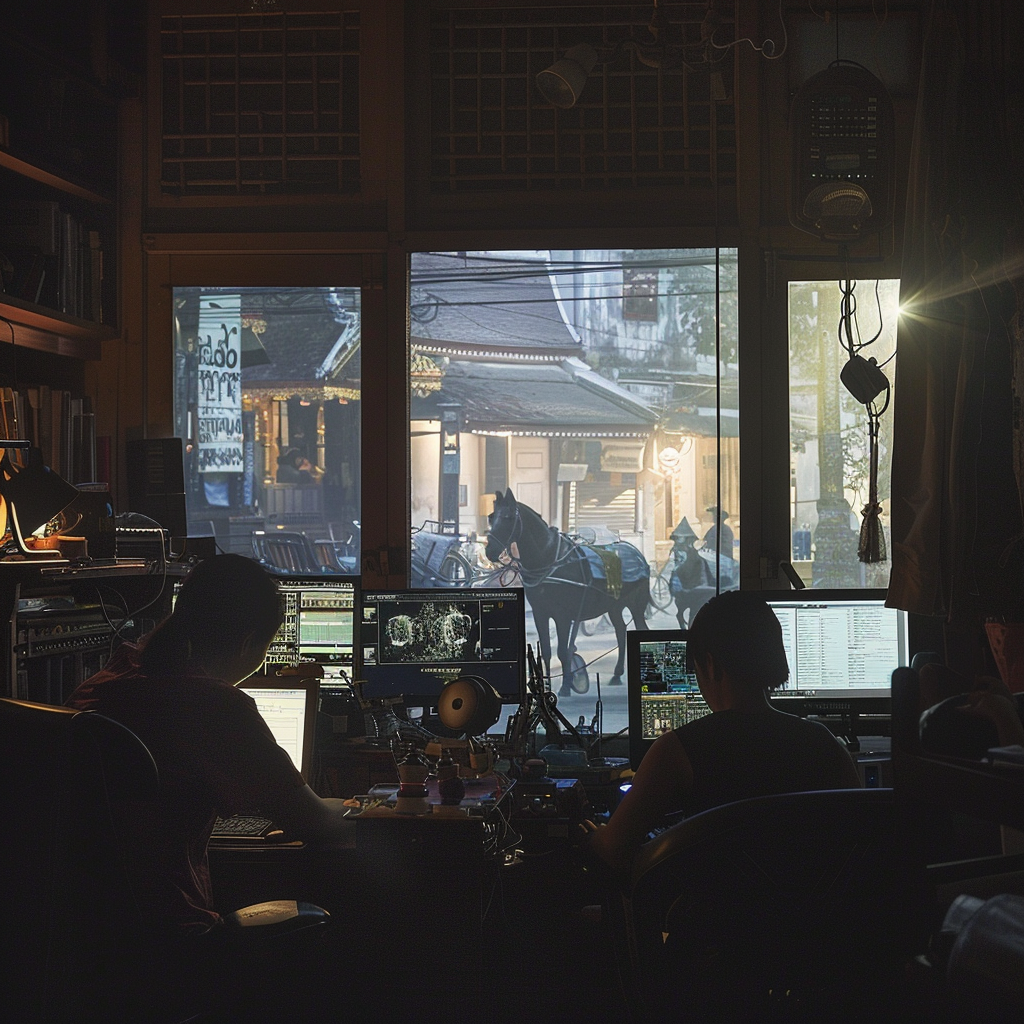
In the quaint town of Lampang, nestled in the northern expanse of Thailand, a thrilling police operation unfolded, straight out of a high-stakes drama. The protagonists? Two sisters, Punika Arayasuwan, aged 41, and Pratthana Arayasuwan, aged 39, who found themselves at the heart of a police investigation into a gambling empire with a staggering 700 million baht ($21 million) in play. This wasn’t just any run-of-the-mill operation; it was a meticulously orchestrated raid that peeled back the layers of an online gambling nexus sprawled across two provinces and ensnared the imaginations of thousands. The tale began to unravel on a Thursday, as dawn broke over Lampang, a place known more for its horse-drawn carriages than its cybercrime. Yet, here we were, witnessing the Cyber Crime Investigation Bureau (CCIB) deploying its forces to crack down on what was described as a major online gambling syndicate. The raids targeted not just the…

It was a day draped in dramatic irony and high stakes at the Royal Thai Police headquarters in Bangkok. Enter Pol Gen Surachate Hakparn, known affectionately (and somewhat ominously) as “Big Joke”—although the matter at hand was anything but laughable. Dressed to impress in a suit and tie, ditching his usual uniform attire, Surachate was on a mission. His goal? To challenge his suspension head-on and to pave his way to becoming the next national police chief—a position he sees not just as a job, but as his destiny. The corridors of power at the police headquarters buzzed with the whispers of officers and bureaucrats alike. Surachate, with the poise of a chess grandmaster making his opening move, sent a flurry of complaints to where it mattered: the Police Commission and an ethics committee of the Royal Thai Police. His contention? The suspension lacked legality, a maneuver he portrayed as…

In the shadow-lit streets of Nonthaburi, a tale akin to cinematic underworld sagas unfolds, featuring a trio of Japanese men whose lives intertwine with the murky depths of yakuza affiliations. The tale’s protagonists, Takuya Kato, aged 50, and Hiroto Suzuki, 33, have become the subjects of an intense manhunt after allegations arose of them orchestrating a crime that seems straight out of a noir thriller. Their alleged victim, 47-year-old Ryosuke Kabashima, met a fate most grim, sparking a mystery that reverberates through the alleys of Nonthaburi province. The Nonthaburi Provincial Court, on a day shrouded with anticipation, issued arrest warrants, setting the stage for a gripping narrative. The duo is accused of a chilling act on the night of March 27, within the secluded confines of a warehouse in Bang Bua Thong district. The plot they allegedly concocted was macabre: shooting Kabashima and then dismembering his body with cold precision,…

In the lush, verdant expanses of Nakhon Phanom, nestled within Thailand’s picturesque northeastern panorama, a storm brewed that shook the very foundations of ethical conduct and cast a shadow over the pristine Dong Prathai forest reserve. At the heart of this controversy stood Supachai Phosu, a figure whose career – spanning roles from deputy agriculture minister to deputy House speaker – exuded an aura of respectability and authority. Yet, beneath this veneer of public service lay a tale of overreach and environmental encroachment. February 2022 painted a picture of Supachai presiding over parliamentary debates with the gavel of authority. Little did the onlookers know, this scene of legislative governance belied a backdrop of questionable ethics. The National Anti-Corruption Commission (NACC), an entity dedicated to upholding integrity, unearthed a saga that would tarnish the image of this esteemed public servant. Supachai was found to have brazenly claimed 220 rai (approximately 88…

In the pulsating heart of Thailand’s bustling political scene, Deputy Prime Minister and Commerce Minister Phumtham Wechayachai finds himself sweeping through the corridors of power with the élan of a seasoned chess master. This time, however, the board is set with pieces of high economic stakes, digital maneuvers, and whispers of intrigue courtesy of a mysterious document that has seemingly leaked from the vaults of the Bank of Thailand (BoT). Phumtham, who comfortably sits as the second-in-command within the cabinet’s hierarchy, is brushing off the leaks as if they were mere specks of dust on his polished shoes. Despite the document’s dire warnings against the ambitious digital wallet handout scheme, Phumtham’s reaction is cloaked in a mixture of mystery and indifference. “Has anyone seen this so-called classified document?” he muses, questioning the authenticity of the document that he hasn’t laid eyes on. “And if it’s truly of substance, why was…

Under the cloak of nightfall in Khon Kaen, an audacious escape unfolded that could rival the plot of a high-stakes thriller. In the heart of this bustling Northeastern Thai province, 35-year-old Ratchaphon Khiannok, a man recently convicted in a high-profile drug case, made a daring leap for freedom. It was Wednesday night, a time when the streets begin to whisper tales of the day’s end, but for Ratchaphon, it marked the beginning of an unfathomable adventure. Imagine the scene at the Khon Kaen Provincial Court, a place where justice is murmured in hushed tones and the future of many is decided. It was here that Ratchaphon, still adorned in the chains that spoke of his recent sentencing, became the protagonist of his own action-packed escape. With a practiced agility, he scaled the court’s fence at precisely 5.11pm, under the watchful eyes of security cameras that could scarcely believe the spectacle…

In the serene city of Khon Kaen, which typically basks in the calmth of its historical richness and cultural vibrancy, a thrilling episode unfolded one unsuspecting Wednesday night, setting the pulse of the local law enforcement racing. The protagonist of this real-life action drama? Ratchaphon Khiannok, a name that would soon echo across the media channels, not for accolades but for an audacious escape that seemed ripped right out of a Hollywood escape thriller. The setting was the Khon Kaen Provincial Court, a place where justice whispers through its halls, and on this fateful night, it witnessed an astonishing act of daredevilry. Ratchaphon Khiannok, donned in the unmistakable attire of a defendant in a drug case, decided that fate had another plan for him. Instead of resigning to the somber journey back to the confines of a prison cell, he penned a different ending to his day. The plot twist?…

“` Imagine zipping through the bustling streets of Bangkok with ease, the city’s notorious traffic jams nothing but a distant memory. This isn’t just a daydream for the distant future—it’s becoming a reality thanks to the efforts underway along the emblematic Rama II Road. As we dive into the developments transforming one of Bangkok’s key arteries, there’s a palpable buzz of excitement in the air. The Prime Minister, Srettha Thavisin, has recently showered praises on both government and private entities for their joint efforts in enhancing the flow of traffic along this vital route. Indeed, the end is in sight with all construction expected to wrap up by next year, promising smoother rides and significantly lessened commuting woes. Government spokesperson Chai Wacharonke relayed the Prime Minister’s commendations, highlighting the strategic partnership between state and private sectors in tackling the notorious congestion on Rama II Road. The Prime Minister’s directive? To…