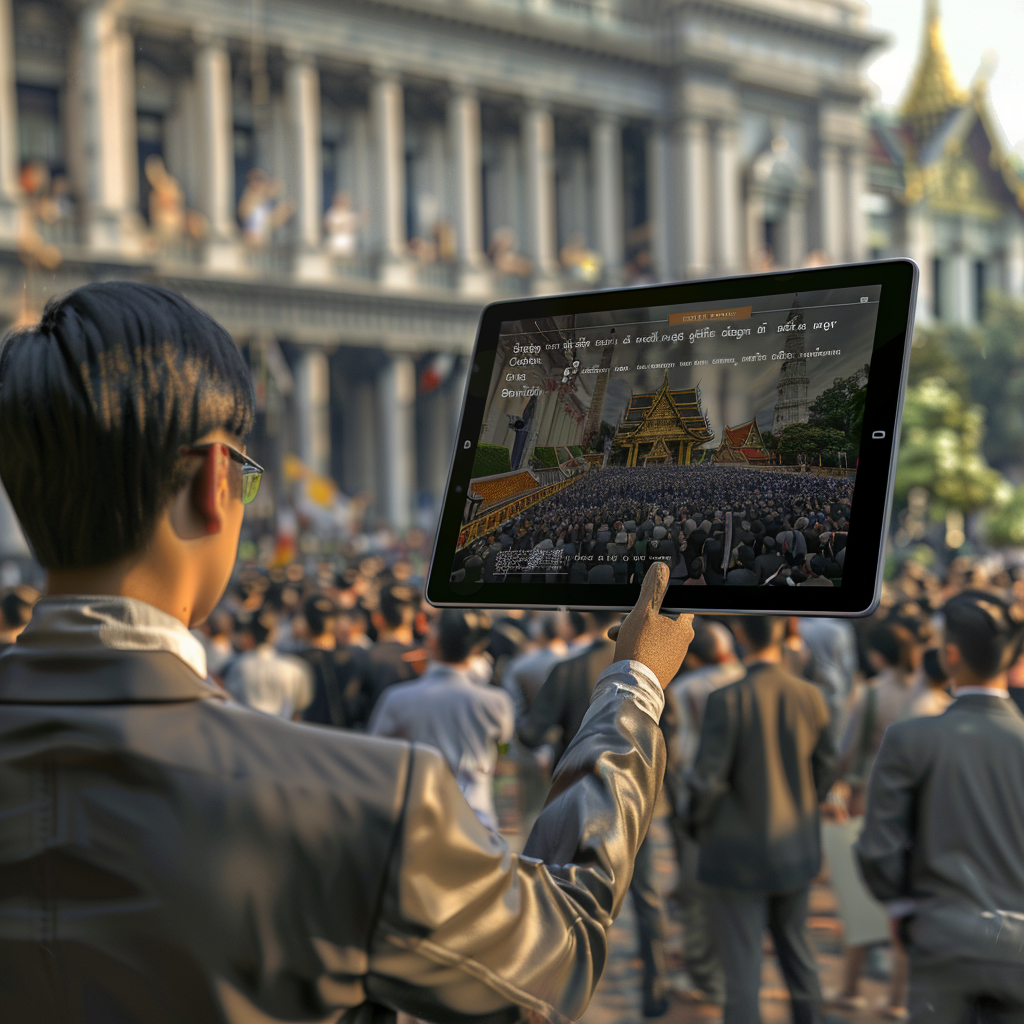
In an intriguing turn of events that feels like it’s straight out of a political thriller, Thailand’s Election Commission (EC) is currently embroiled in a captivating investigation. The plot thickens with allegations swirling around attempts to sway the election process for the nation’s new senators. Imagine the scene: a shadowy webpage, whispers of manipulation, and the future of democracy hanging in the balance. This is not your everyday electoral tale. The EC, acting as the guardians of Thailand’s democratic process, issued a stern warning. It seems that the Progressive Movement, a political group known for its avant-garde ideas, might just have taken things a step too far. They’ve been accused of promoting a website that could potentially be leading citizens astray. The website in question? A digital platform encouraging people to come together in a bid to contest the Senate election. But here’s the catch: such a rallying call might…
THAI.NEWS - Thailand Breaking News
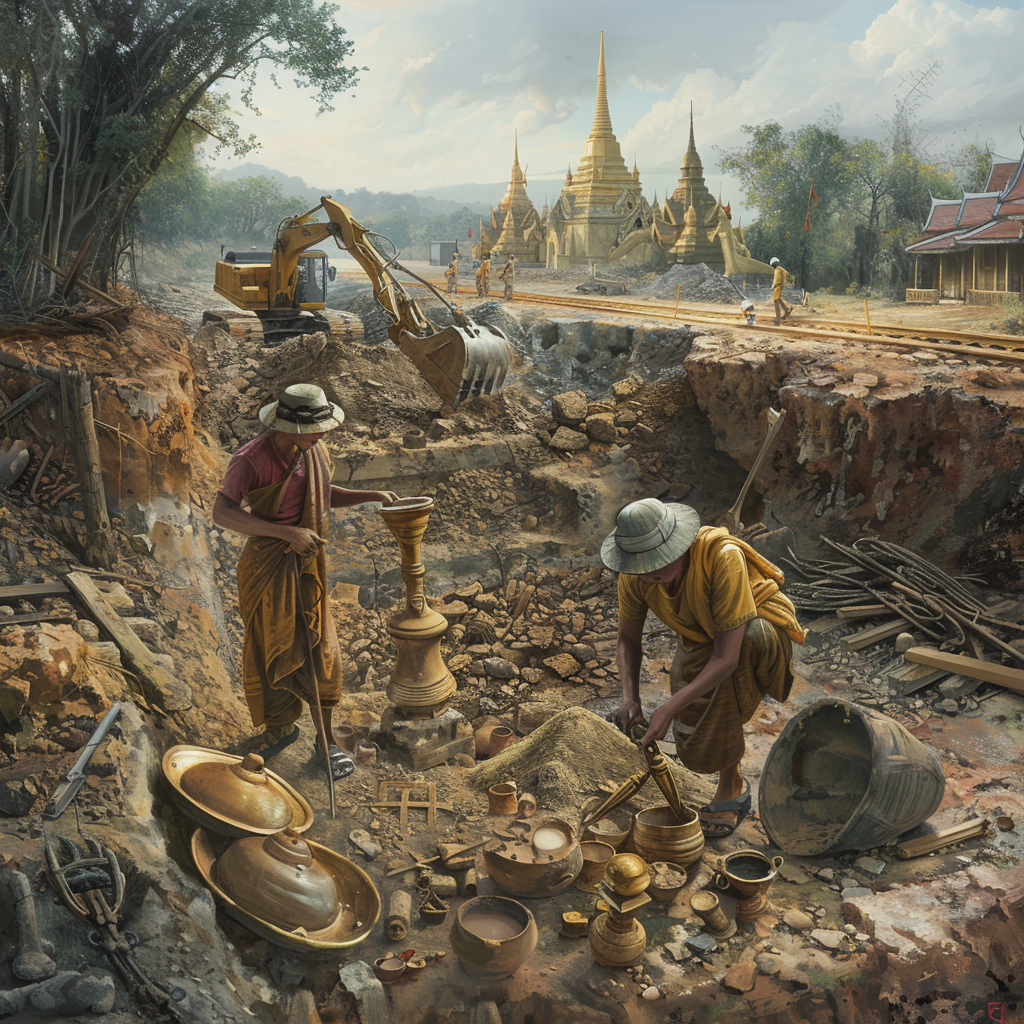
Imagine stumbling upon a hidden treasure trove from centuries past, right in the midst of modern day hustle and bustle. This isn’t the plot of an Indiana Jones movie; it’s exactly what happened in the serene settings of tambon Toong Kwao in Phrae’s Muang district. The Fine Arts Department slammed the brakes on the construction of the Den Chai-Chiang Khong railway after workers unearthed a cache of ancient artefacts, whispering tales from a time 400 to 500 years ago. Among the treasures were Buddha amulets that perhaps once offered protection and guidance, shards of broken earthenware that might have been part of everyday life, and a bronze gong that possibly resonated through ancient ceremonies. Chinnawut Winyalai, the steward of historical treasures as the director of the 7th Regional Office of Fine Arts in Chiang Mai, couldn’t hide his excitement about the discovery. “These objects are windows to our past,” he…
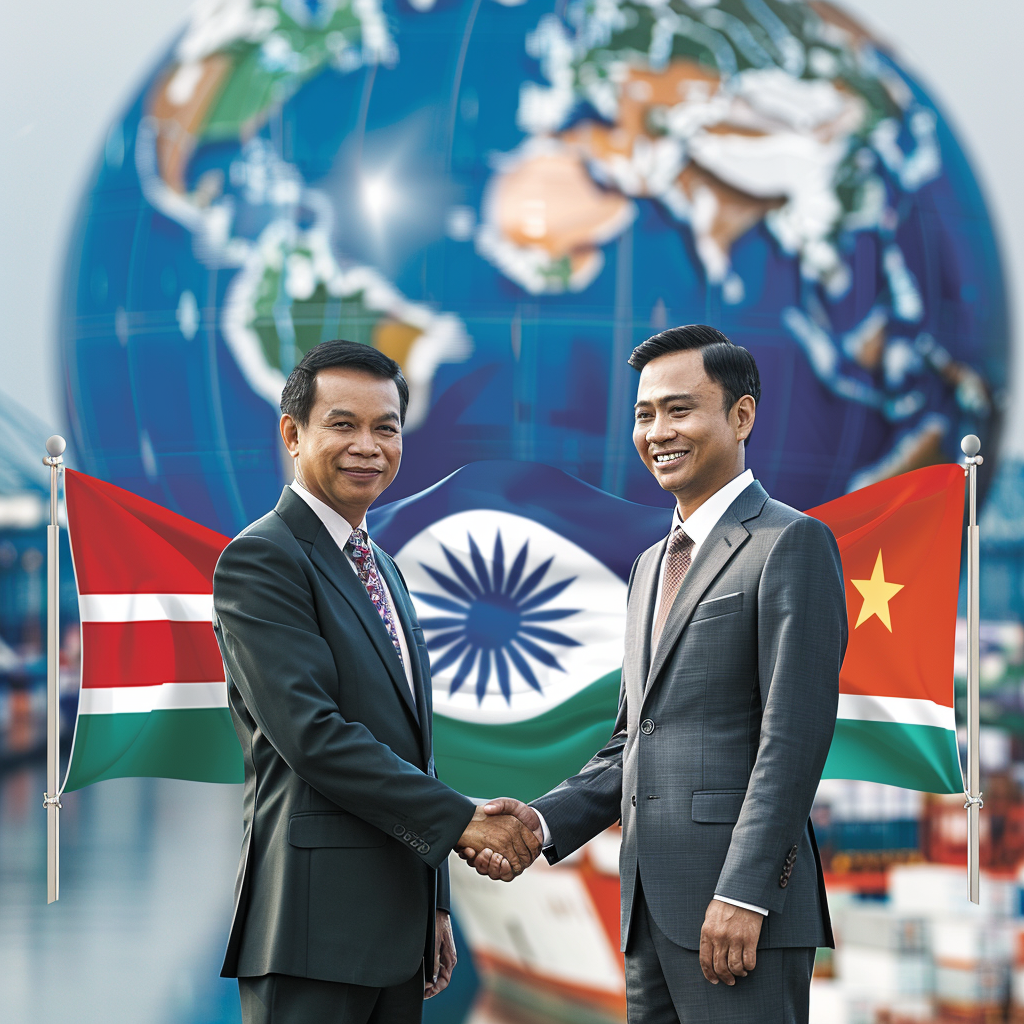
In a historic meeting at the Santi Maitree Building in Government House, marked by the warm handshakes of Bangladesh Prime Minister Sheikh Hasina and Prime Minister Srettha Thavisin of Thailand, a new chapter was written in the annals of international relations. The ceremony, a vivid tableau of diplomacy and mutual respect, saw the signing of five pivotal agreements and memorandums of understanding. This seminal moment promised to not only strengthen ties but also to herald a new era of cooperation between these two vibrant nations. The air buzzed with excitement as both countries laid down their commitment to forging a path towards a Free Trade Agreement (FTA). This ambitious intent, sealed with a letter signed in the presence of leaders from both nations, is a beacon guiding the way towards expedited negotiations. Prime Minister Srettha Thavisin, in a statement brimming with optimism, expressed his pleasure in both nations aligning their…
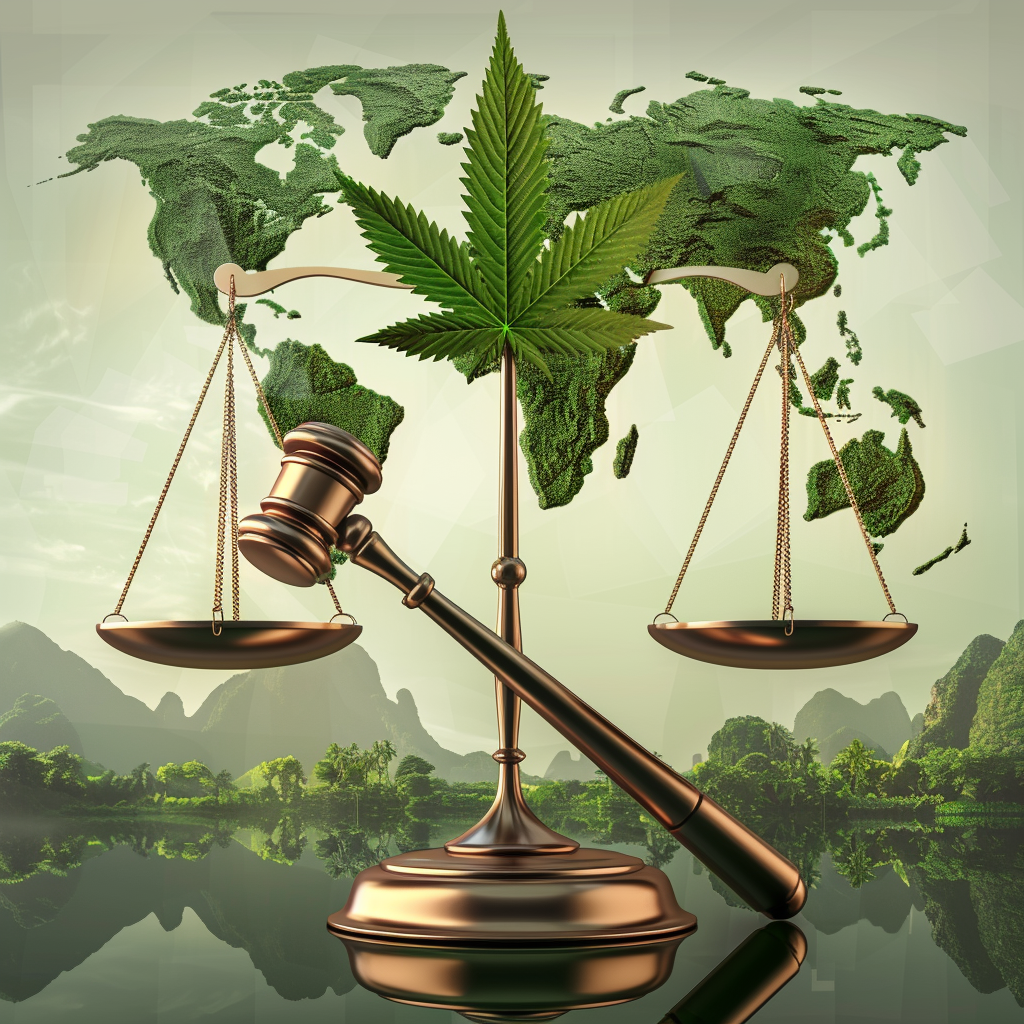
Welcome to the whirlwind world of Thai politics, where the air is thick with intrigue and the scent of cannabis reform! It seems the Land of Smiles has been caught in a high-stakes drama that would make even the most seasoned political observers reach for a bag of popcorn. Let’s rewind the tape to when Prime Minister Srettha Thavisin, a man who prides himself on coalition unity, shrugged off cabinet reshuffle rumors like a boss. Yet, his recent chat with France 24 threw a spanner in the works, sparking whispers and side-eyes across Thailand’s political stage. In an unexpected plot twist, he hinted at tightening the reins on cannabis—a move that had the Public Health Ministry doing a double-take. Enter Dr. Cholnan Srikaew, the Health Minister, stage left. He’s the guy reminding everyone that the cannabis legalisation train has left the station and there’s no turning back now. But Mr.…
In the grand tapestry of Thai politics, the ever-dynamic Deputy Prime Minister Phumtham Wechayachai found himself in the spotlight again, fervently dismissing the swirling rumors that the larger-than-life former Prime Minister, Thaksin Shinawatra, had his fingers in the pie of the upcoming cabinet reshuffle. It was an ordinary Friday that stirred extraordinary speculation, with the political air thick with anticipation and intrigue. At the heart of this political whirlwind was a meeting that seemed ripped from the pages of a political thriller, set against the opulent backdrop of the Rosewood Hotel. This isn’t just any hotel. Owned by the Shinawatra family, it’s a symbol of power, luxury, and familial legacy, suffused with the scent of political intrigue. At this very venue, Phumtham, alongside Prime Minister Srettha Thavisin, reportedly sat down for what many believed was a rendezvous with destiny. The streets buzzed with the word that they were there to…
In the intriguing world of Thai politics, whispers of a cabinet reshuffle have been swirling like a monsoon season storm. At the epicenter of these rumors stood Deputy Prime Minister Phumtham Wechayachai, a figure known for his calm amid the political tempests. On a day steeped in speculation, he stepped forward to quell the stormy gossips: former Prime Minister Thaksin Shinawatra, a name that invokes a myriad of emotions in the Thai political spectrum, had not whispered a word nor cast a shadow in the discussions on the impending cabinet reshuffle. The air was thick with curiosity as Phumtham dispelled the notion that Thaksin had attended a critical meeting that Thursday. The meeting in question was not just any gathering. It took place at the luxurious Rosewood Hotel, a property that sings the songs of the Shinawatra lineage, between Phumtham and the man at the helm, Prime Minister Srettha Thavisin.…
Imagine stepping into a world where opulence meets diplomacy—a world where regal splendor and strategic partnerships weave together to craft a story of enduring friendship and burgeoning alliances. This is the backdrop to a captivating chapter that will unfold at the end of April, with His Majesty Sultan Haji Hassanal Bolkiah Mu’izzaddin Waddaulah of Brunei embarking on an official visit to the Land of Smiles, Thailand, on the 28th and 29th of April, as an honored guest of the government. The Sultan won’t be making this significant journey alone; he will be accompanied by his distinguished son, His Royal Highness Prince Abdul Mateen, the Ministry of Foreign Affairs announces, setting the stage for a visit rich in both symbolism and substance. The royal entourage’s arrival heralds a series of engagements destined to fortify the ties between these two nations. Upon their arrival, a royal audience with Their Majesties King Maha…
In an extraordinary display of international solidarity, leaders from a remarkable gathering of 18 countries have taken a bold step forward, issuing a resounding plea for the release of hostages in Gaza. This electrifying joint statement, released by the Ministry of Foreign Affairs on a Thursday that will be etched in history, saw the joining of forces by countries as diverse as the flavours of the world itself. From the tango-infused streets of Argentina to the majestic Alps of Austria, from the rhythm-filled carnivals of Brazil to Bulgaria’s rose valleys, and from the sprawling landscapes of Canada to Colombia’s coffee-rich hills, these nations united for a cause that speaks to the very core of humanity. The coalition, also comprising Denmark, France, Germany, Hungary, Poland, Portugal, Romania, Serbia, Spain, Thailand, the United Kingdom, and the United States, issued a clarion call against the injustice of hostage-taking by Hamas in Gaza. For…

In the land of smiles and the explosive water festivities of Songkran, Prime Minister Srettha Thavisin has swung into action, resembling a superhero in a well-tailored suit. With the infectious joy of the festival came a less welcome guest – a spike in Covid-19 cases that has prompted the Prime Minister to sound the alarm. Imagine the scene as Deputy Prime Minister’s Office spokeswoman, Kenika Ounjit, took to the stage yesterday, not to announce a new box office blockbuster, but to deliver a script that’s becoming all too familiar: the battle against Covid-19 is far from over. Authorities, painted as knights in this ongoing saga, have been tasked by PM Srettha to ensure their fortresses (hospitals, in this case) are primed and ready for any potential siege by the invisible enemy. Amidst this call to arms, citizens are advised to don their masks as if they were mystical shields, purify…

In a twist of political intrigue that feels more like the plot of a savvy political thriller than real life, the Office of Election Commission (EC) has found itself at the center of a swirling controversy. Picture this: an intricate web of electioneering, digital age tactics, and a bold plot to reshape the legislative landscape. It’s not every day that an alleged attempt to rig the selection of senators comes to light, thrusting the EC into the spotlight and launching them into a full-blown investigation. At the heart of the storm is the EC’s warning—a solemn heads-up to potential senatorial candidates about not getting lured into registering via a potentially dodgy website. The statement came off the back of escalating whispers that the upcoming election of new senators might be under threat from not just any manipulation, but a concerted effort to skew the field in favor of certain perspectives.…